

Results of Abbey studies shared for the first time
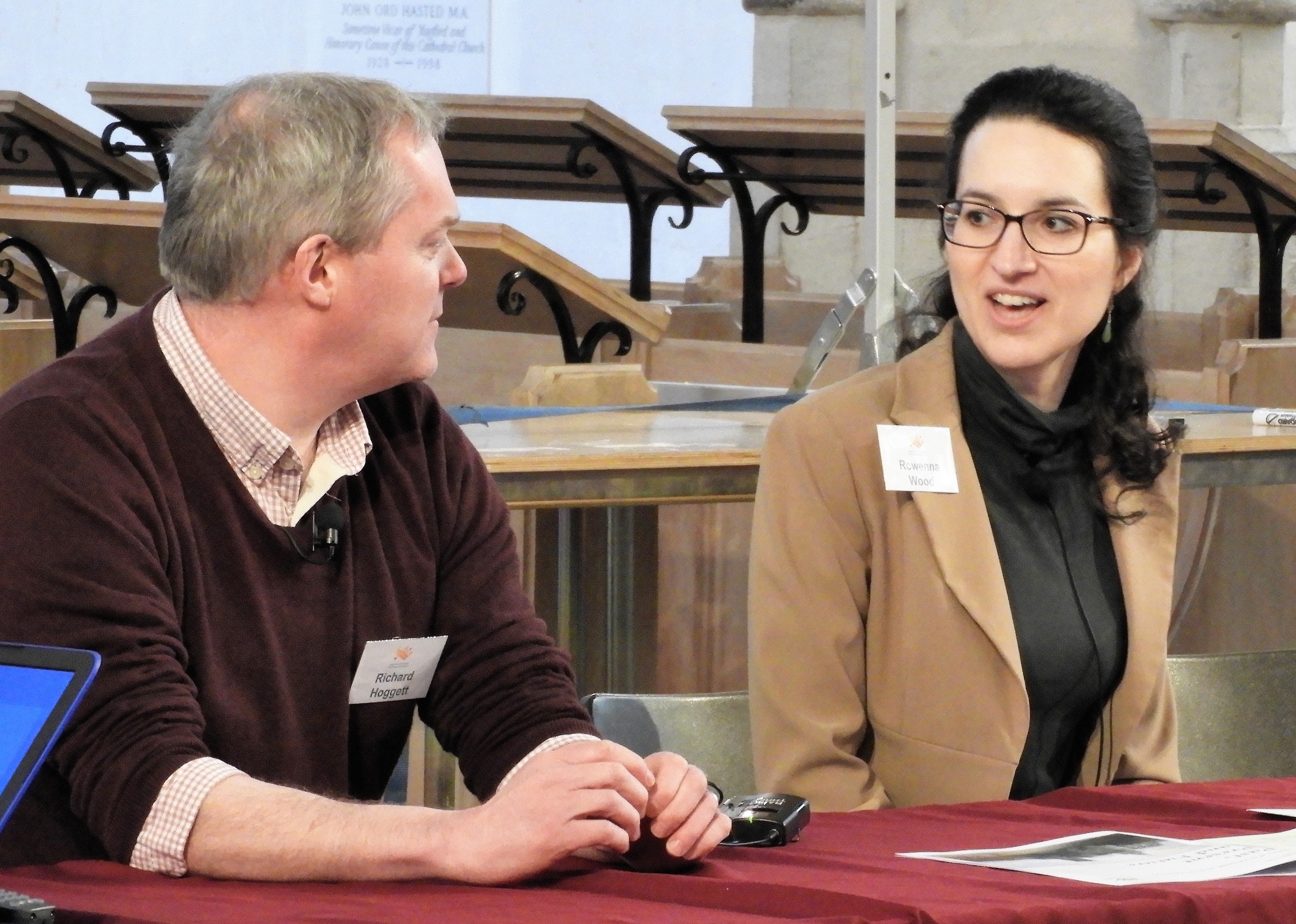
Around 175 people attended the Abbey of St Edmund: Past, Present & Future one day conference supported by the University of East Anglia and held at St Edmundsbury Cathedral on Saturday where the results of a Heritage Assessment and Conservation Plan were revealed.
Both studies were commissioned by the Abbey of St Edmund Heritage Partnership with grant support from Historic England and St Edmundsbury Borough Council. Both studies have now been published online at www.stedscathedral.org.uk/abbeyofstedmund and www.westsuffolk.gov.uk/abbeyofstedmund
A summary booklet of the two studies is also available online and paper copies will be available from Friday (February 1) at the Cathedral tourist information point, Bury St Edmunds Library, Moyse’s Hall Museum, The Apex, West Suffolk House, The Guildhall and the Bury Free Press reception. The booklet invites comments from local people and others on the results of the studies and priorities for future action.
Reverend Canon Matthew Vernon, Chairman of the Heritage Partnership, said: “The legend of St Edmund our former patron saint, began in the middle of the ninth century and is still proudly celebrated today as part of our Suffolk identity. The Abbey has been central to the story of Bury St Edmunds for the past 999 years while its international significance can still be felt today through its role as the birthplace of Magna Carta, a set of human rights that heavily influenced the United States Bill of Rights and other laws governing modern society.
“The Heritage Partnership exists to explore how we can all understand the Abbey’s cultural, historical and spiritual significance much better. It also aims to conserve it for generations to come, for both local people and visitors to appreciate and enjoy. It was great to be able to present the results of these two studies which are a key part of our work and to invite public feedback that will help shape the future direction of our work.”
The Heritage Study was carried out by Richard Hoggett and found that despite the historical and archaeological investigations carried out to date, an immense amount still remains to be discovered.
Purcell, an architectural and heritage consultancy, prepared the Conservation Plan which suggests projects for the future care and interpretation of the Abbey of St Edmund. The Abbey area covers 60 acres including the Abbey Gardens, St Edmundsbury Cathedral, the Great Churchyard, St Mary’s Church, the former Eastgate Nursery, the former Abbey Vineyards, the Crankles and No Man’s Meadow.
Robert Everitt, Cabinet Member for Families and Communities at St Edmundsbury Borough Council, said: “This has been an exciting opening phase to the work of the Heritage Partnership. Of course, further statutory permissions and scans of the whole site will need to be undertaken before we can answer the big question of whether St Edmund is buried under the tennis courts. Whether he is or he isn’t, one thing is for sure: next year will mark 1,000 years since the Abbey was founded, and we can look forward to a series of community events to celebrate our wonderful heritage here in the heart of West Suffolk.”
The Abbey of St Edmund Heritage Partnership is led by St Edmundsbury Cathedral and St Edmundsbury Borough Council in collaboration with nearly 20 other local and regional public, private and voluntary organisations.
Pictured above are Richard Hoggett, who carried out the Heritage Study, and Rowenna Wood, of Purcell Purcell, who prepared the Conservation Plan.