

Creating a vocal legacy for patients
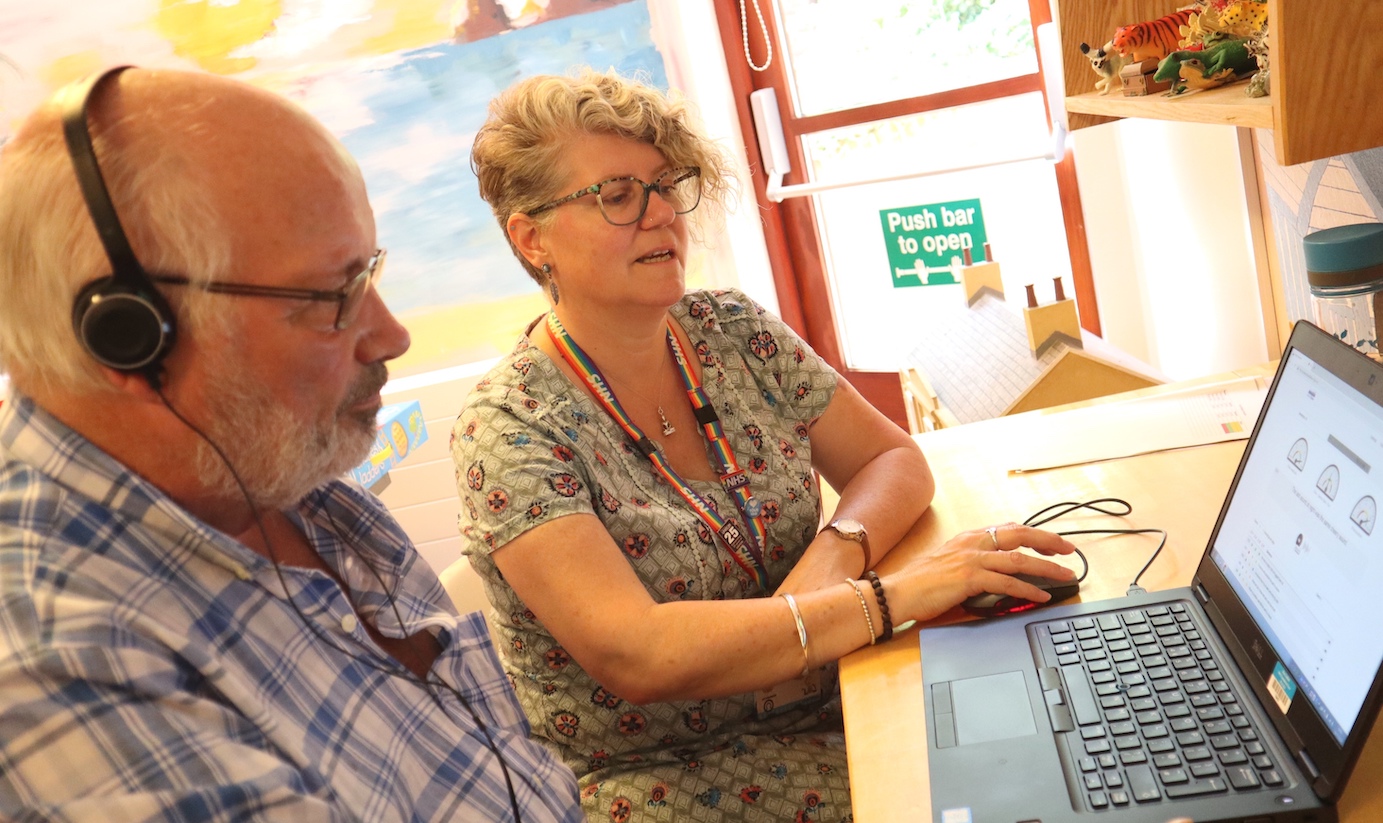
People in West Suffolk with a devastating condition which affects their speech are being supported to use pioneering technology to create a permanent “voice bank” for their loved ones.
Voice banking allows a person to record phrases which can then be converted to create a personal synthetic voice when they no longer have the ability to use their own.
Patients diagnosed with motor neurone disease (MND) work with speech and language therapists and a staff volunteer from the West Suffolk NHS Foundation Trust (WSFT), with support from the MND Association and St Nicholas Hospice. Voice banking means that people who feel they are losing much of their identity can still “speak” to their friends and family.
Most people with MND (80-95%) experience weakness in the mouth, throat and tongue, so voice banking allows them to record an infinite number of words and sentences that can be generated in a synthetic voice that bears a resemblance to the person’s speech.
As part of their work, WSFT’s adult speech and language therapists (SALT) provide a range of therapies to people with neurological conditions in both hospital and community settings, including those diagnosed with MND. Several therapists have been trained to use the voice banking software, but an increase in referrals meant the team were struggling to offer the intensive, one to one sessions every patient needs in a timely way. Trust librarian Laura Wilkes offered to train as a volunteer in addition to her normal duties so that patients could access the service.
Liza Asti, SALT professional lead at WSFT, said: “We are trained to offer voice banking to patients and are as flexible as possible, but having Laura working with patients is very valuable and saves therapy time for the team.”
She said that the link with St Nicholas Hospice gives people a helpful, early introduction to the hospice and its work.
Motor neurone disease affects up to 5,000 people in the UK, meaning about one in 300 people is at risk of developing it. It is most likely to affect people over 50, and there are four types of MND which can progress at varying speeds. Messages from the nerves (neurones) in the brain and spinal cord stop reaching the muscles, which weaken, stiffen and waste. MND affects how people walk, talk, think and breathe, can cause pain or discomfort and can sadly be life-limiting.
West Suffolk NHS Foundation Trust speech and language therapist Kristy Finnigan said: “For people diagnosed with MND, the disease will progress but their symptoms can be managed to ensure best quality of life. Laura’s help is invaluable in allowing patients to bank their voices, supporting them to create a legacy for family and friends.”
Voice bank technology is constantly evolving. The SALT team have had training on the latest voice banking software which reduces the amount of recordings required which will further improve the patient experience. They were also joined by SALT colleagues from East Suffolk.
The MND Association can loan headset microphones and laptops if required to ensure patients can take advantage of this service. The charity works nationally and regionally to support MND sufferers and their families, raise funds and awareness of the disease. There is a support and fundraising group in Suffolk, visit www.mndassociation.org for information.